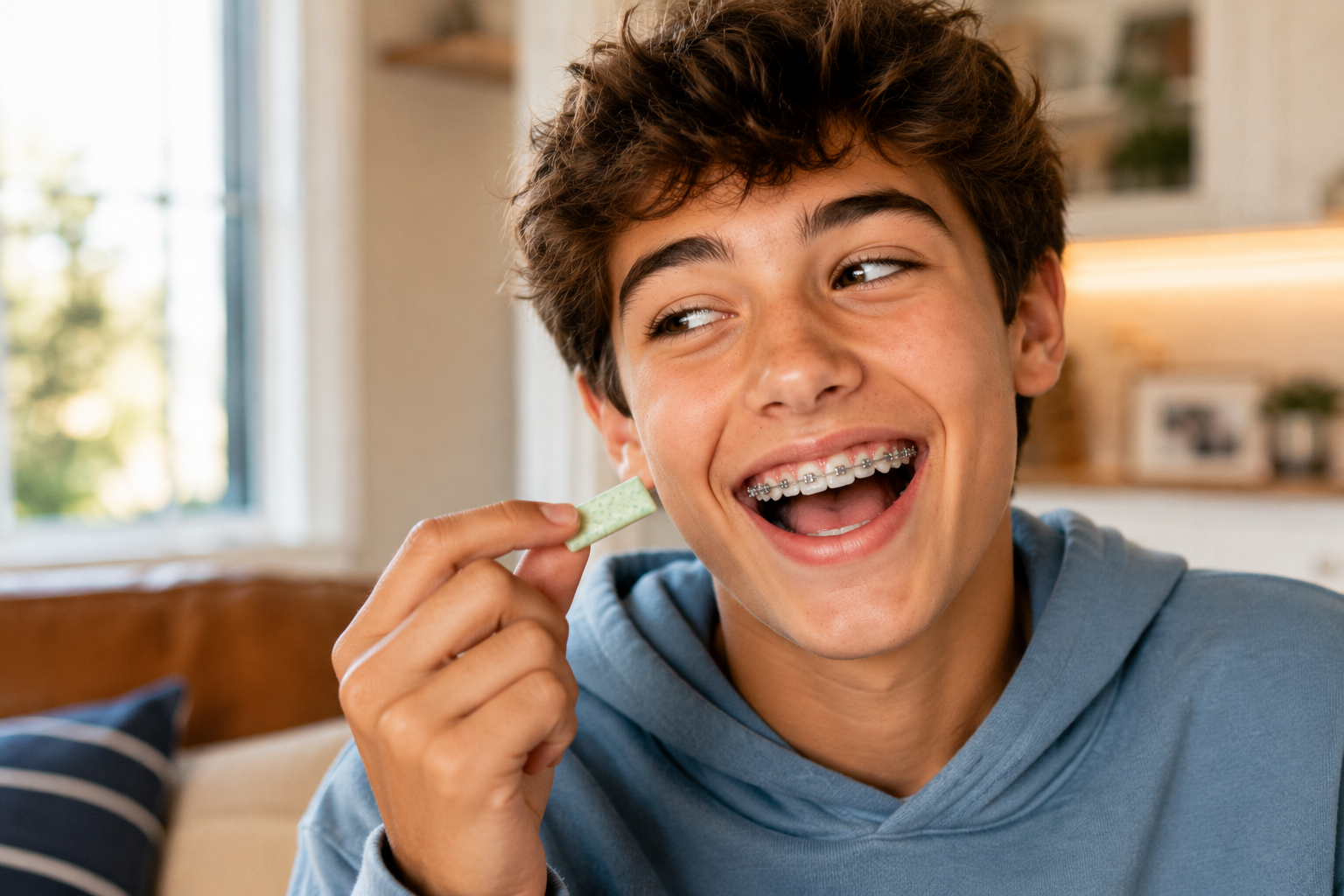
One of the most common questions we hear at Prince Orthodontics is, “Can you chew gum with braces?” The short answer is: it depends.
While some types of chewing gum may be less likely to cause problems than others, there are still important factors to consider. The same goes for other sticky foods with braces, including caramel, taffy, gummy candy, fruit snacks, and chewy candies.
The good news is that wearing braces doesn’t mean your child has to give up every favorite snack. Making smart choices helps protect their smile, keeps treatment on track, and reduces the chance of a broken bracket or emergency repair.
If you’re preparing for orthodontic treatment or have questions about caring for braces, visit our New Patients page to learn what to expect throughout your family’s orthodontic journey:
So, Can You Chew Gum with Braces?
Many orthodontists recommend avoiding gum during treatment, especially with traditional braces.
Here’s why.
When you chew gum with braces, it can stretch around your brackets and wires, making it difficult to remove completely. Sticky gum can pull on the wire, loosen a bracket, or become trapped in places that are difficult to clean.
That doesn’t mean every piece of gum will immediately damage your braces, but the risk is high enough that many orthodontists recommend choosing other options whenever possible.
At Prince Orthodontics, we’ll help you understand which foods support successful treatment and which ones are best saved until your braces come off.
Does It Matter What Kind of Gum You Chew?
Yes.
Not all gum is created equal.
Sugar-Free Gum
Some research suggests that chewing sugar free gum may increase saliva production, which can help rinse away food particles and neutralize acids that contribute to tooth decay. However, even sugar free gum or sugarless gum can still be sticky enough to catch on orthodontic appliances. While it may contain less sugar than traditional gum, it still has the potential to damage brackets or wires.
Sugary Gum
Sugary gum creates two concerns. First, the sticky texture can cling to braces. Second, the sugar feeds oral bacteria, increasing the risk of cavities, plaque buildup, and tooth decay if it isn’t cleaned away thoroughly. If your child has braces, sugary gum is generally one of the first items we recommend avoiding.
Why Sticky Foods Are a Bigger Problem Than Most Parents Realize
Parents often think of gum first, but it’s usually other sticky snacks that cause the biggest problems during orthodontic treatment.
Foods that stretch, cling, or pull require extra force to chew. That force can loosen a bracket, bend a wire, or create unnecessary delays in treatment.
Some of the biggest offenders include:
- Caramel
- Taffy
- Gummy bears
- Fruit snacks
- Licorice
- Chewy candy
- Bubble gum
- Saltwater taffy
- Sticky granola bars
- Fruit chews
Each of these foods contains a sticky substance that can become wrapped around brackets or trapped beneath wires. Even if no damage occurs immediately, cleaning sticky residue from braces can be challenging.
Damon Braces Make Cleaning Easier, But Smart Food Choices Still Matter
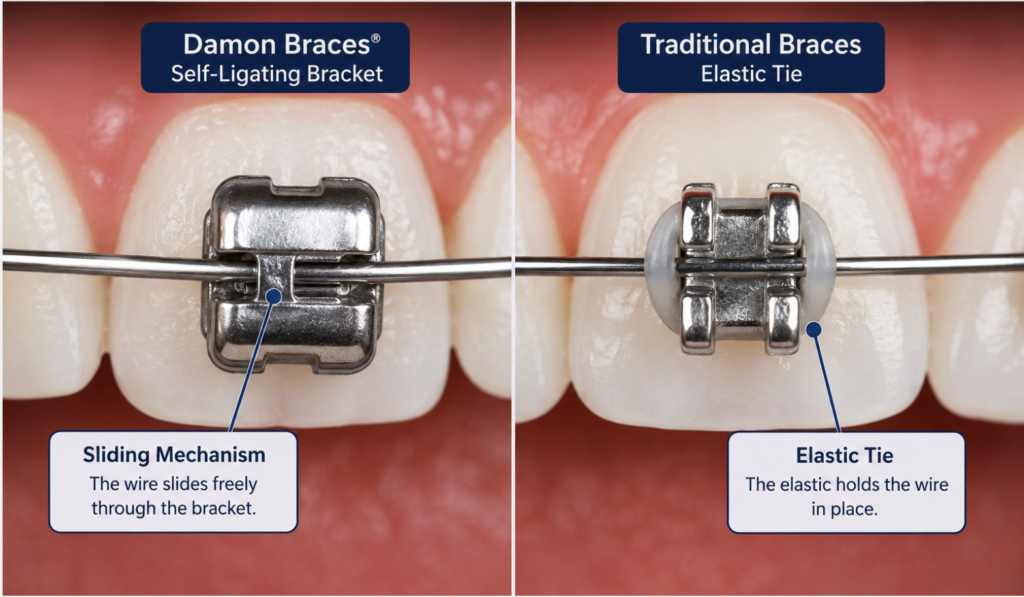
At Prince Orthodontics, Dr. Prince specializes in Damon Braces, an advanced self-ligating system that works differently than many traditional braces.
Unlike conventional braces that rely on elastic ties, Damon Braces use a sliding mechanism to hold the wire in place. Without elastic bands around every bracket, there are fewer places for food to collect.
That can make oral hygiene a little easier during treatment.
However, Damon Braces are not immune to sticky foods.
Chewing caramel, taffy, or sticky gum can still place extra pressure on the brackets and wires. Choosing braces-friendly snacks remains one of the easiest ways to avoid unnecessary repairs and keep treatment progressing as planned.
The American Association of Orthodontists (AAO) also recommends following your orthodontist’s dietary guidelines throughout treatment to help prevent broken appliances and keep treatment progressing as planned.
Foods to Avoid with Braces
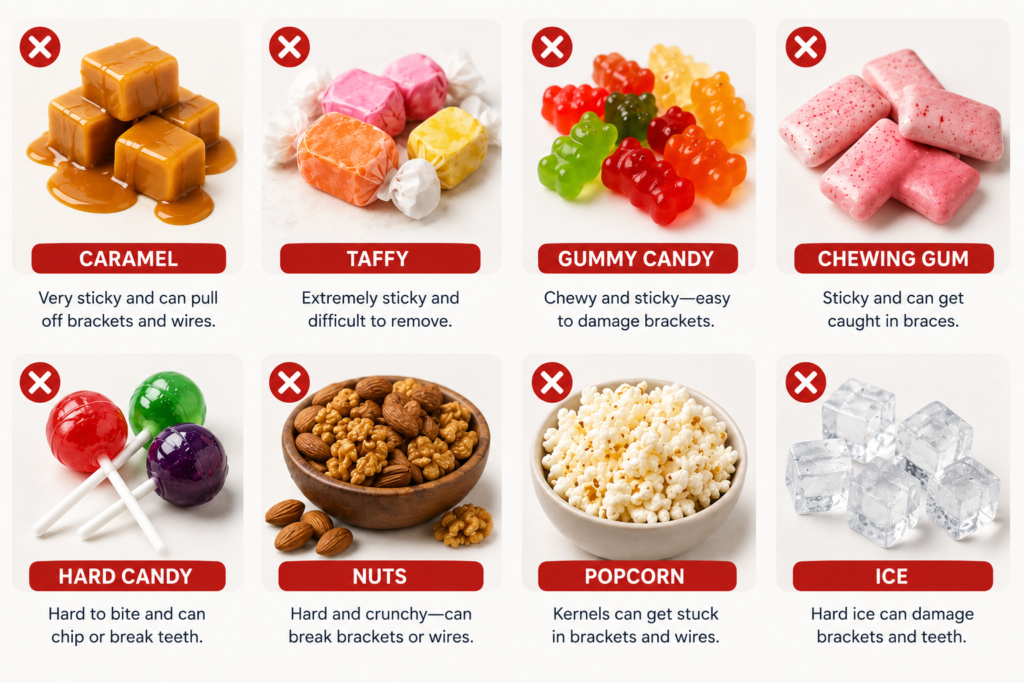
If you’re wondering about foods to avoid with braces, think of anything that’s especially sticky, chewy, or difficult to bite through.
It’s best to limit or avoid:
- Gum
- Caramel
- Taffy
- Gummy candy
- Fruit snacks
- Hard candy
- Jawbreakers
- Popcorn kernels
- Ice
- Sticky protein bars
These foods increase the likelihood of a loose bracket, bent wire, or damaged orthodontic appliance. Every unexpected repair appointment can interrupt treatment and may even extend the amount of time your child wears braces.
Better Snack Choices for Kids with Braces

Fortunately, there are plenty of braces-friendly foods your family can enjoy.
Some great options include:
- Yogurt
- Applesauce
- Cheese
- Bananas
- Soft berries
- Scrambled eggs
- Smoothies
- Peanut butter on soft bread
- Pasta
- Rice
- Soft cooked vegetables
These foods are easy to chew, gentle on brackets, and support good oral health throughout treatment. Choosing braces-friendly snacks also helps parents spend less time worrying about emergency appointments caused by broken appliances.
Keep Your Smile Healthy During Orthodontic Treatment
Food choices are only part of protecting your smile. Excellent oral hygiene is just as important while wearing braces. Brackets and wires create extra places where food and plaque can collect, making daily cleaning essential.
Healthy habits include:
- Brushing after meals with fluoride toothpaste.
- Flossing every day using dental floss or floss threaders.
- Rinsing with mouthwash if recommended by your orthodontist.
- Scheduling regular dental cleaning appointments with your family dentist.
- Using orthodontic wax if a bracket temporarily causes irritation.
If a wire or bracket ever feels uncomfortable, don’t ignore it. Contact Prince Orthodontics so we can help before it becomes a bigger issue.
The American Dental Association also recommends brushing twice daily, flossing every day, and limiting sugary foods to reduce the risk of cavities and tooth decay:
Frequently Asked Questions
Can You Chew Sugar-Free Gum with Braces?
Some orthodontists may allow occasional chewing sugar free gum, but it depends on your treatment plan and the type of braces you’re wearing. While sugar free gum contains less sugar than regular gum and may help stimulate saliva production, it can still stick to brackets and wires. At Prince Orthodontics, we recommend asking Dr. Prince before adding gum back into your routine. Every smile is different, and your treatment plan should guide your food choices.
What Happens if Gum Gets Stuck in Your Braces?
If gum becomes stuck in your braces, don’t panic. Avoid pulling on the gum, as this can loosen a bracket or bend a wire. Instead, gently rinse your mouth with cool water and carefully remove as much gum as possible using your toothbrush. If you’re unable to remove it or notice a loose bracket or bent wire afterward, contact Prince Orthodontics. The sooner we address the problem, the more likely we can prevent delays in your orthodontic treatment.
What Other Sticky Foods Should You Avoid with Braces?
Besides gum, it’s best to avoid foods that are sticky, chewy, or difficult to bite into. Some of the biggest culprits include:
- Caramel
- Taffy
- Fruit snacks
- Gummy candies
- Licorice
- Sticky granola bars
- Chewy candy
- Hard caramels
These foods can increase the risk of chewing gum braces damage, broken brackets, loose wires, and extra repair appointments.
Does Chewing Gum Delay Orthodontic Treatment?
Not necessarily, but it can. If chewing gum causes a bracket to break or a wire to bend, your teeth may stop moving as planned until your appliance is repaired. Even a small delay can affect the overall timeline of your treatment. Making braces-friendly food choices is one of the easiest ways to help keep your treatment on schedule.
What Can I Chew Instead of Gum to Freshen My Breath with Braces?
If you’re looking for a way to freshen your breath without chewing gum, consider braces-friendly alternatives such as:
- Sugar free mints that dissolve instead of requiring chewing
- Drinking plenty of water to help prevent dry mouth
- Brushing after meals
- Flossing daily
- Using an alcohol-free mouthwash if recommended by your dentist or orthodontist
These options help support fresh breath while protecting your braces and promoting good oral health.
Related Resources
Want to learn more about caring for your braces and protecting your smile? These resources can help.
We’re Here to Help Your Family Smile with Confidence
Braces come with a few adjustments, especially when it comes to snacks and treats. While the answer to “Can you chew gum with braces?” isn’t always a simple yes or no, making smart food choices helps protect your child’s smile and keeps treatment moving forward.
At Prince Orthodontics, we believe orthodontic care should fit into real family life. That’s why we’re here to answer your questions, offer practical guidance, and support your child through every stage of treatment.
Whether you’re wondering about gum, sticky foods, or braces-friendly snacks, you never have to figure it out on your own.
Have questions about what your child can eat with braces?
Call Prince Orthodontics or schedule your FREE consultation today. Dr. Prince is happy to walk through any concerns and help your family make confident choices throughout treatment.