Do you find yourself asking “how much does Invisalign cost?” The honest answer is that it depends. Your case, the number of aligners you need, and your provider all play a role. Most patients pay somewhere between $3,500 and $8,500 for a full course of treatment. Below is a look at what drives that number and how to find out your exact price.
If you have questions about the cost of Invisalign, contact our office today to schedule your orthodontic consultation.
Cost Breakdown
Average Cost of Invisalign
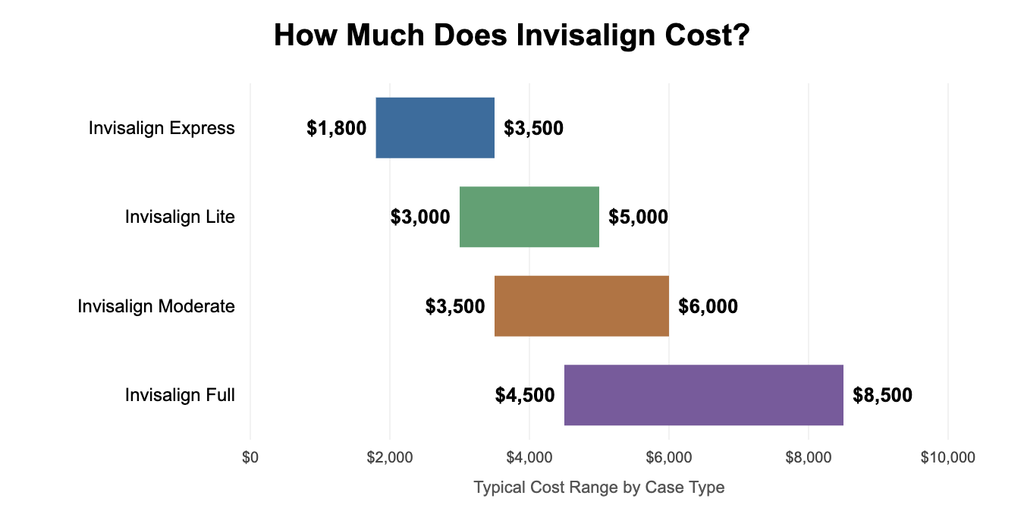
Invisalign generally runs between $3,500 and $8,500. Where you land in that range depends on how much your teeth need to move, and how many aligners that takes. That range covers most patients, though a consultation is the only real way to get an exact figure for your smile.
| Treatment Type | Typical Price Range |
| Invisalign Express (mild corrections) | $1,800 to $3,500 |
| Invisalign Lite (mild to moderate crowding or spacing) | $3,000 to $5,000 |
| Invisalign Moderate (noticeable crowding or spacing) | $3,500 to $6,000 |
| Invisalign Full (complex cases) | $4,500 to $8,500 |
These numbers reflect the full treatment, not a per visit cost. Your final number depends on the factors below. These ranges are estimates that line up with published figures from Invisalign and My Specialty Dentist.
How Does Invisalign Work?
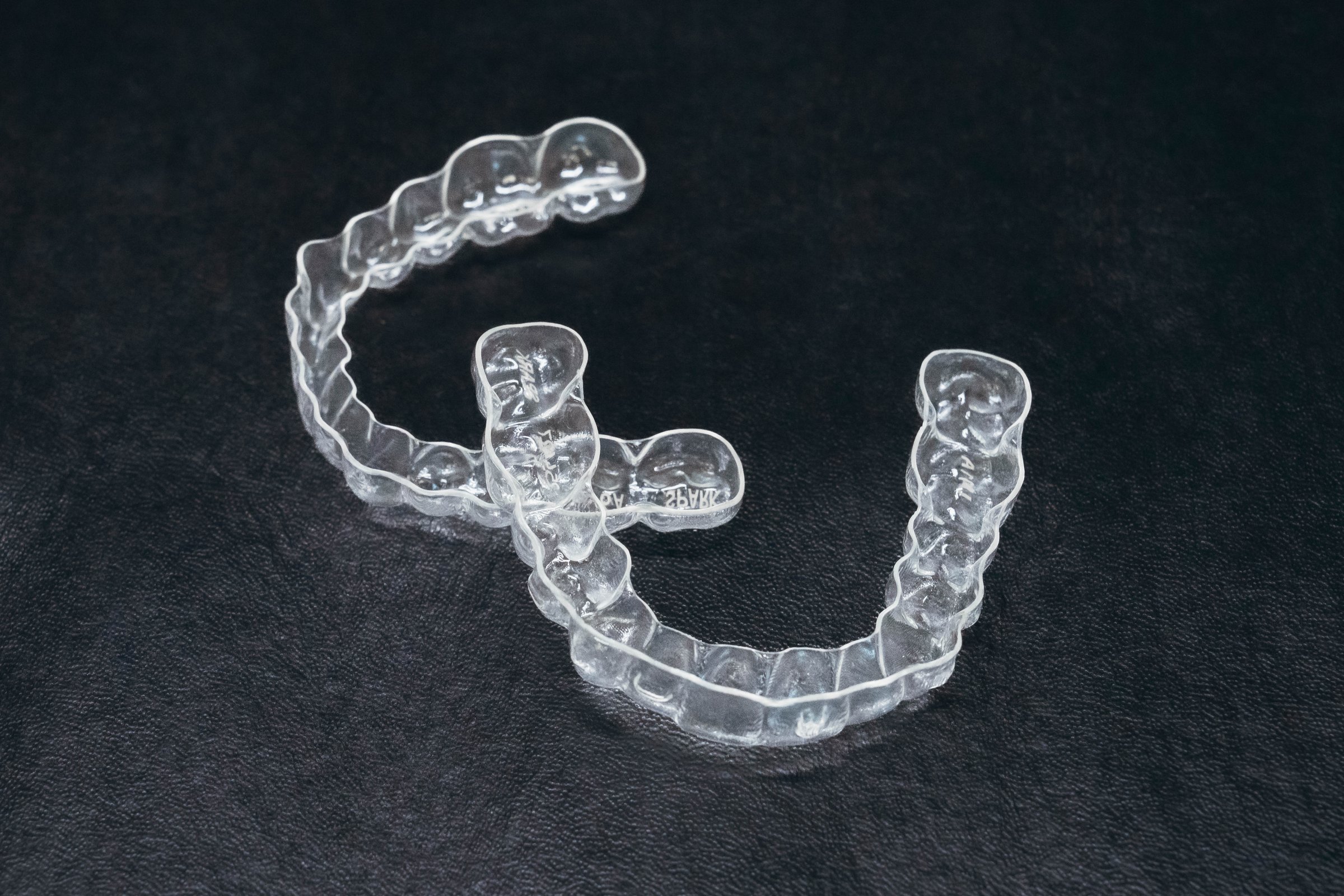
Treatment starts with a 3D digital scan of your teeth. Your orthodontist uses that scan to design a custom series of clear aligner trays that gradually shift your teeth into place. You wear each tray for one to two weeks before switching to the next one in the series, with periodic check-ins so your orthodontist can track your progress and adjust the plan if needed.

What the Total Price Actually Includes
An Invisalign quote usually covers your initial consultation, digital scans, your full series of custom aligners, and regular check-ins to track your progress. Many offices also include refinements or a set of retainers once treatment ends, while others bill those separately. Ask your orthodontist for a written breakdown before you commit, so you know exactly what’s included and what isn’t.
What Affects How Much Invisalign Costs
Case Complexity
Crowding, spacing, bite issues, and how far your teeth need to travel all affect how long treatment takes and what it costs. A mild case might finish in a few months. A complex one involving significant crowding or a bite correction can take a year or more, and may require extra refinements along the way.
Number of Aligners
Every aligner is custom made for a specific stage of your treatment. More tooth movement means more aligners, and more aligners add to the total cost. This is why a mild case costs far less than a full treatment plan.
Treatment Length
Longer treatment means more check-ins and more time from your orthodontist. Wearing your aligners as directed, usually 20 to 22 hours a day, helps keep you on schedule and can help you avoid extra refinement trays.
Provider Experience
Who plans and oversees your treatment matters too. An orthodontist has completed additional specialty training focused on moving teeth and guiding jaw growth. Prices can vary between practices, so it helps to compare what each quote actually includes, not just the bottom line.
Geographic Location
Prices shift by region and even by city. Where you live is one of the factors that can affect what you pay for Invisalign, according to Healthline. Even within the same area, you’ll see differences between practices depending on overhead and demand. A local quote is the only way to know your real number.
Invisalign vs. Braces Cost
Many patients ask whether Invisalign costs more than braces. For mild to moderate cases, the two are often priced similarly. As cases get more complex, the gap can shift in either direction, since the total depends far more on your case than on the type of appliance. Here is how the two compare at a glance.
| Feature | Invisalign | Traditional Braces |
| Typical cost | Often similar to braces | Often similar to Invisalign |
| Visibility | Nearly invisible | More noticeable |
| Removable | Yes, for eating and cleaning | No, fixed until treatment ends |
| Best for | Mild to moderate cases and a discreet look | Complex corrections |
Pros and Cons of Invisalign
Invisalign has real advantages. The aligners are nearly invisible, removable for eating and cleaning, and generally more comfortable than metal brackets and wires. Treatment also tends to be predictable, since your orthodontist maps out the full series of trays in advance. The trade-offs are worth knowing too. Results depend on wearing your aligners as directed, so they take more discipline than braces, and very complex bite corrections may still be better suited to traditional braces.
Insurance, HSA, and Financing Often Change the Real Cost
Many dental insurance plans with an orthodontic benefit cover Invisalign in much the same way they cover braces. Invisalign notes that dental insurance may cover up to $3,000 of orthodontic treatment, though your plan may set its own limits. Some plans also have a lifetime orthodontic maximum, so it’s worth asking your insurance provider what portion applies to aligners.
Health savings accounts and flexible spending accounts can often be used for Invisalign too, which lets you pay with pre-tax dollars. Most orthodontists also offer monthly payment plans. Ask about all of these before you assume Invisalign is out of reach. Your out of pocket cost is often lower than the sticker price suggests. A few other options can help too. Dental schools with supervised student clinics sometimes offer treatment at a reduced cost, and a no interest credit card can spread out payments if you pay it off before the promotional period ends. If you have kids on Medicaid or CHIP, check whether your plan covers orthodontic treatment for qualifying cases.
Is Invisalign Worth It?
Straight teeth are only part of the story. Properly aligned teeth are easier to clean, put less strain on your jaw, and can help prevent bigger dental problems later. Because aligners are removable, many patients also enjoy fewer food restrictions and easier brushing and flossing during treatment. Weigh the upfront cost against years of easier care and a smile you’re happy with, and for most patients, it ends up feeling like money well spent.
Invisalign Alternatives
If clear aligners aren’t the right fit, lingual braces (brackets placed behind the teeth instead of in front) offer a hidden option, though they can take longer to get used to. Other clear aligner brands are also on the market, generally at a lower price point, but they often come with less in office support and can take longer to deliver comparable results. Talk with your orthodontist about which option best fits your case and budget.
Getting the Most Out of Your Aligners
Getting the full value out of your treatment comes down to consistency. Wear your aligners 20 to 22 hours a day, taking them out only to eat, drink anything besides water, and brush and floss. Clean them regularly and switch trays on schedule. Skipping wear time is one of the most common reasons treatment runs longer or needs extra refinement trays, which adds to the total cost.
Aftercare Costs
Treatment cost doesn’t end when your last tray is finished. Most orthodontists include a set of retainers in the initial price, but replacements typically run $100 to $500 each. Since teeth can shift back after treatment, plan on wearing your retainer as directed to protect the investment you just made.
Questions to Ask Before You Decide
A good consultation should leave you with a clear picture, not more questions. Before you commit, ask for a full cost breakdown, what exactly is included (retainers, refinements, follow up visits), which insurance and financing options apply to your plan, and how long your specific treatment is expected to take.
How to Get an Exact Price for Your Smile
A consultation is the only way to know your real cost. We’ll evaluate your teeth, walk you through your options, and give you a clear price with no surprises. You can also read more about our clear aligner options.
FAQ
How much does Invisalign cost on average?
Most patients pay between $3,500 and $8,500, depending on how complex their case is and how many aligners they need.
Is Invisalign more expensive than braces?
Not always. For mild to moderate cases, the two are often priced similarly. A consultation is the only way to compare accurately for your smile.
Does insurance cover Invisalign?
Many plans with an orthodontic benefit cover a portion of Invisalign treatment. Check with your provider for your specific benefits.
Can I use an HSA or FSA for Invisalign?
In most cases, yes. Health savings accounts and flexible spending accounts can typically be used for orthodontic treatment, including Invisalign.
Can I finance Invisalign?
Yes. Most orthodontists, including our office, offer monthly payment plans to make treatment more affordable.
Are you ready to start your smile journey? Book your next orthodontic appointment with us today to get your exact price.