
An overbite, underbite, or crossbite affects more than the way a smile looks. These bite issues change how the upper teeth and lower tooth alignment come together, which can affect chewing, speech, and long term oral health. The good news is that braces and other orthodontic treatment options are highly effective at correcting all three, whether the case is mild or more complex.
This guide covers what causes each type of bite issue, how braces and clear aligners correct them, and what patients and parents can expect from treatment.
What Is a Bite Issue? Overbite, Underbite, and Crossbite Explained
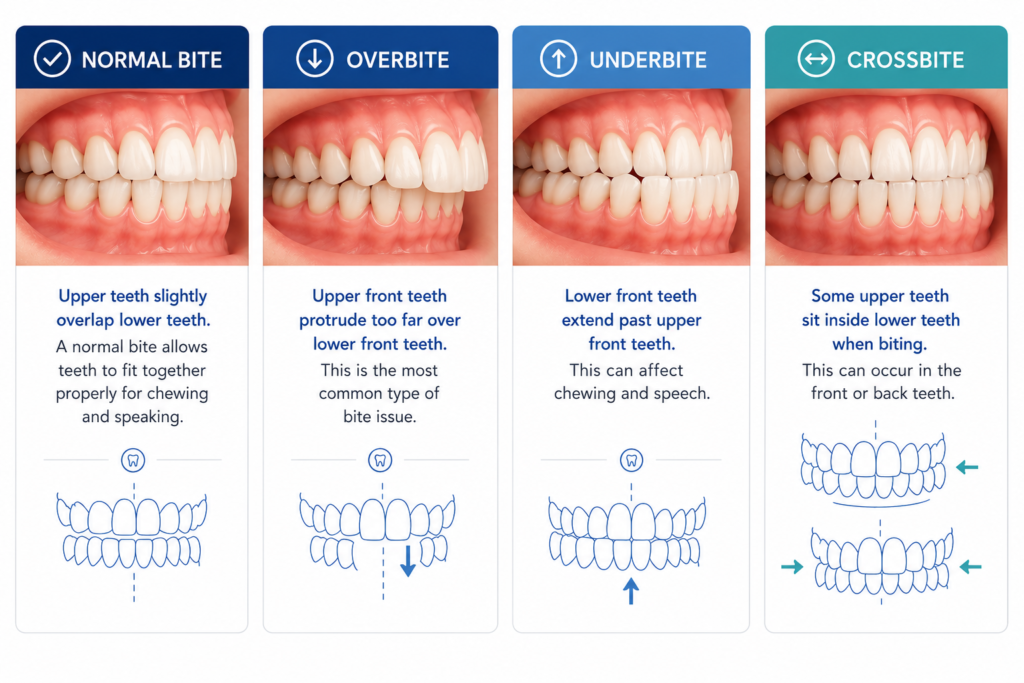
A healthy bite happens when the upper teeth slightly overlap the lower teeth and the jaw is properly aligned. When that alignment is off, orthodontists refer to it as a malocclusion, a general term covering several types of bite problems.
Overbite occurs when the upper teeth overlap the lower teeth more than they should, sometimes described as buck teeth in more excessive cases. Underbite is the opposite, where the lower jaw and lower teeth sit forward of the upper jaw. Crossbite happens when one or more upper teeth sit inside the lower teeth instead of outside them, which can affect one side of the mouth or several teeth at once.
Each of these bite issues falls somewhere on a spectrum from minor overbite or slight overbite to a more severe case that affects both appearance and function.
What Causes an Overbite?
An overbite cause can be genetic, developmental, or behavioral. Some patients inherit a jaw shape or tooth alignment pattern from their parents, leading to what orthodontists call a skeletal overbite, where the upper jaw and lower jaw themselves are mismatched in size or position. Others develop a dental overbite, where the jaw bones are properly aligned but the teeth have shifted or erupted out of position.
Childhood habits also play a significant role. Thumb sucking, tongue thrusting, and prolonged pacifier use can all push the upper teeth forward over time, contributing to an overbite or worsening one that is already present. Missing teeth, teeth grinding, and even mouth breathing have been linked to bite issues as well.
Types of Overbite
Not all overbites look the same, and the type matters when it comes to treatment planning. Overbites are generally described using two scales, how deep the overlap is and where the misalignment comes from.
By depth, a normal overbite involves a small amount of overlap between the upper and lower teeth. A moderate overbite involves more noticeable overlap, while a deep overbite or deep bite means the upper teeth cover a significant portion of the lower teeth, sometimes to the point where the lower teeth barely show. In more extreme situations, an impinging overbite can cause the lower teeth to bite into the gum tissue behind the upper teeth, which can lead to discomfort and gum irritation over time.
By origin, a dental overbite involves the teeth themselves, while a skeletal overbite involves the underlying jaw structure. A severe skeletal overbite, where the upper jaw significantly overlaps the lower jaw, sometimes requires a different treatment approach than a straightforward dental overbite. Orthodontists may also describe overbites as horizontal overbite or vertical overbite depending on whether the primary issue is how far the teeth protrude or how much they overlap top to bottom.
Left untreated, an untreated overbite, especially an excessive overbite or severe overbite, can lead to uneven tooth wear, jaw pain, and a higher risk of tooth decay or gum disease due to difficulty cleaning misaligned teeth.
Can Braces Fix an Overbite?
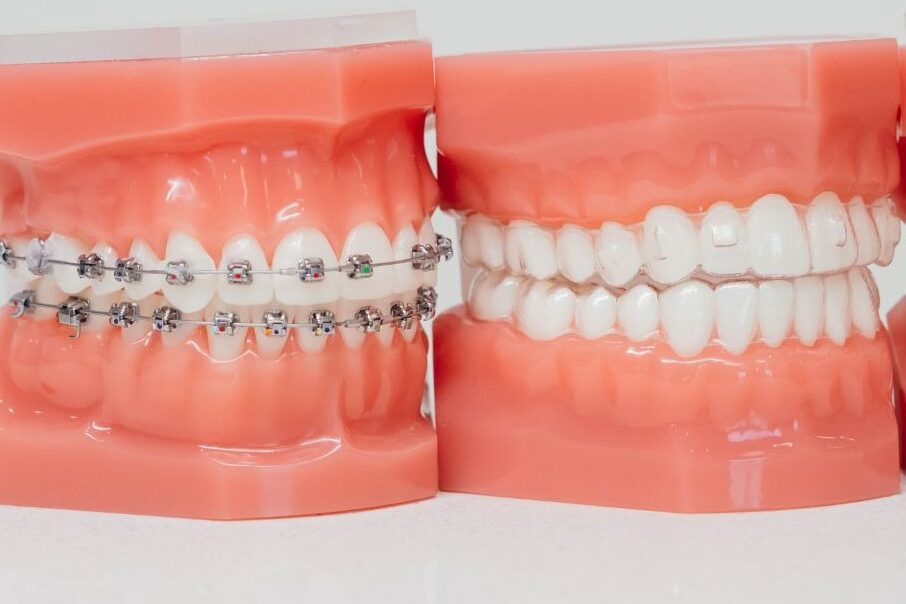
Yes. Braces are one of the most effective and time tested treatment options for overbite correction. Traditional braces use metal braces or ceramic brackets connected by an archwire, sometimes paired with elastics, to gradually guide the upper teeth and lower teeth into proper alignment. As the archwire applies steady pressure, it corrects the excessive overlap and helps bring both the bite and jaw into better alignment.
For patients with a dental overbite, braces alone are often enough to fully correct the issue. For patients with a skeletal overbite, particularly a severe skeletal overbite, braces may be combined with other tools such as growth modification appliances in younger patients, or jaw surgery in adult cases where the jaw bones themselves are significantly mismatched.
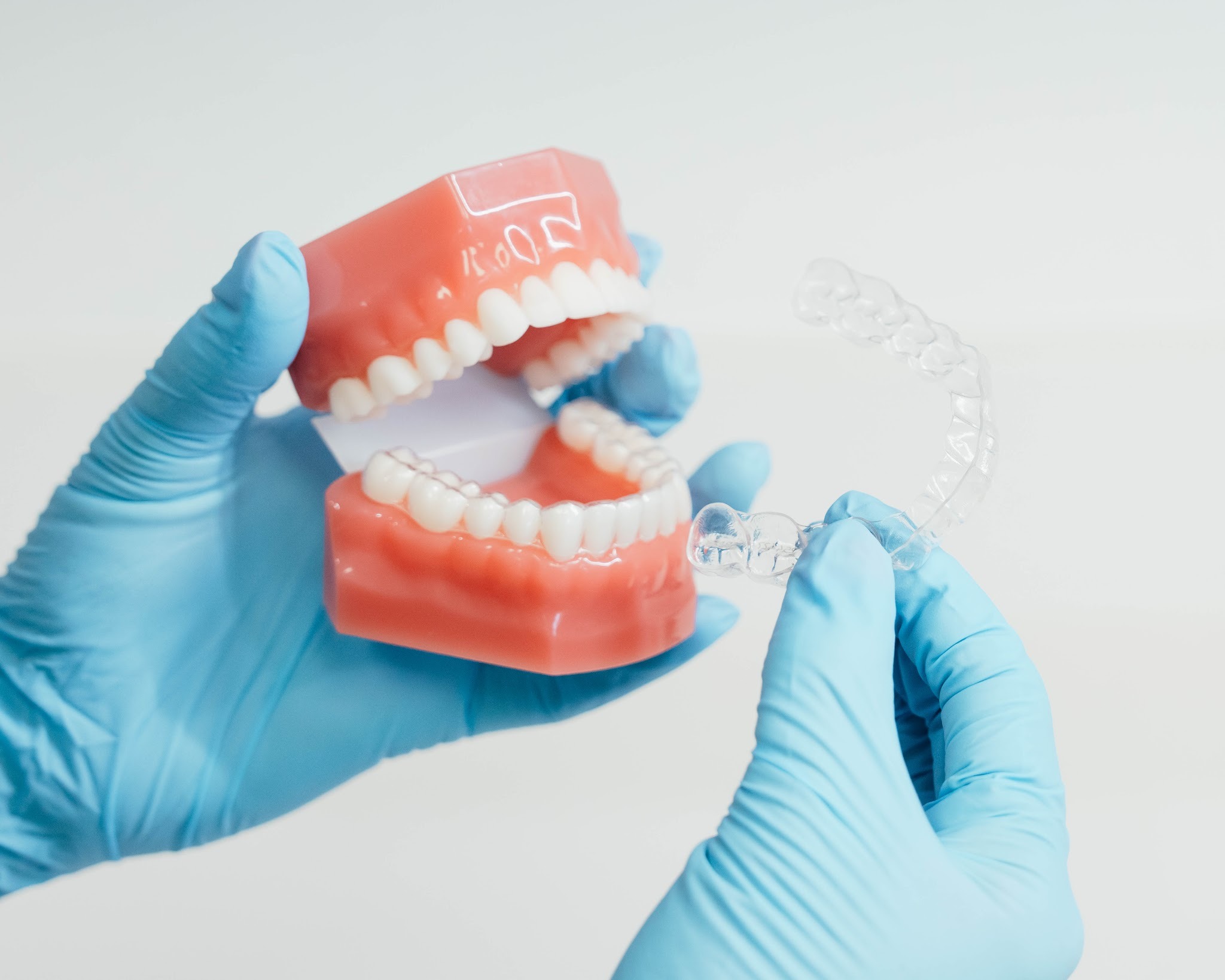
Clear aligners, including Invisalign treatment, can also correct a mild to moderate overbite in many cases. An Invisalign aligner works similarly to braces by applying gentle, consistent pressure, though clear aligners are generally best suited for slight overbite to moderate overbite cases rather than a severe or deep overbite. Teen patients considering this option may benefit from Invisalign Teen, which is designed with features to support consistent wear during active treatment.
Can Braces Fix an Underbite?
Braces can correct many underbite cases as well, particularly when the issue is primarily dental rather than skeletal. Braces and elastics work to shift the lower teeth back and the upper teeth forward, gradually correcting the overlap. In cases where the underbite is caused by significant lower jaw overgrowth, treatment may involve a combination of braces and jaw growth management in younger patients, or a referral for surgical evaluation in more severe adult cases.
Can Braces Fix a Crossbite?
Crossbite treatment often starts earlier than overbite or underbite treatment because early intervention can prevent the jaw from growing asymmetrically. Braces, expanders, or clear aligners are used to gradually move the affected teeth into proper alignment with the rest of the arch. Left untreated, a crossbite can lead to uneven jaw growth, excessive tooth wear, and misaligned teeth that become more difficult to correct over time.
Treatment Options: Braces vs. Clear Aligners

Both braces and clear aligners are effective treatment options for correcting an overbite, underbite, or crossbite, and the right choice depends on the severity of the case, the patient’s age, and lifestyle preferences.
Traditional braces are typically recommended for more complex cases, including a severe overbite, significant crossbite, or cases involving noticeable jaw misalignment, since braces allow for more precise control over tooth movement in multiple directions at once. Clear aligners work well for patients with a mild to moderate overbite or minor alignment concerns who prefer a less visible option. During a consultation, we review the full picture, including X-rays and a bite evaluation, before recommending the treatment option that will deliver the most predictable results.
How Long Does It Take for Braces to Correct a Bite Issue?
Treatment timelines vary depending on the severity of the overbite, underbite, or crossbite, as well as the patient’s age and how consistently any elastics or aligners are worn. Mild to moderate cases often see noticeable tooth movement within several months, with full correction typically completed within 12 to 24 months, similar to standard orthodontic treatment timelines. More severe cases, particularly those involving skeletal misalignment, may take longer and could involve a multi-phase treatment plan.
Is a Crossbite or Underbite More Difficult to Treat Than an Overbite?
Not necessarily. Difficulty depends more on whether the issue is dental or skeletal than on which specific bite type is involved. A mild dental crossbite can sometimes be corrected faster than a severe skeletal overbite. Underbites tend to require closer monitoring since they often involve lower jaw growth, especially in younger patients who are still developing. Regardless of the bite type, early evaluation gives us the most treatment options and the best chance at a straightforward correction.
Do Severe Cases Require Surgery?
Most overbite, underbite, and crossbite cases can be corrected with braces or clear aligners alone. However, a severe case involving significant jaw bone discrepancy, such as a severe skeletal overbite or pronounced underbite, may require orthognathic surgery in combination with orthodontic treatment. This approach is far more common in adult patients whose jaw growth is already complete, since younger patients can often be treated with growth modification instead. We evaluate this possibility during a consultation and will always recommend the least invasive treatment option that can achieve a stable, healthy result.
The Bottom Line
Whether the concern is an overbite, underbite, or crossbite, braces and clear aligners offer reliable treatment options for correcting bite alignment at almost any age. Early evaluation makes a real difference, especially for skeletal cases or bite issues tied to childhood habits like thumb sucking or tongue thrusting.
If a bite issue has been on your mind, our team can evaluate your smile and build a treatment plan suited to your specific case.
Frequently Asked Questions
Can braces fix a severe overbite, underbite, or crossbite, or is surgery required?
Many severe cases can still be corrected with braces alone, especially when the issue is dental rather than skeletal. A severe skeletal overbite or underbite involving significant jaw bone discrepancy may require surgery alongside orthodontic treatment, most often in adult patients whose jaw growth is complete.
How long does it take for braces to correct a bite issue?
Most mild to moderate cases take 12 to 24 months, similar to standard orthodontic treatment. More complex skeletal cases may take longer and sometimes involve a multi-phase treatment plan.
Is a crossbite or underbite more difficult to treat than an overbite?
Difficulty depends more on whether the case is dental or skeletal than on the specific bite type. Underbites often require closer monitoring due to lower jaw growth, particularly in younger patients.
Wondering if braces or clear aligners could correct your bite?
Schedule a consultation with Prince Orthodontics to have your overbite, underbite, or crossbite evaluated and get a personalized treatment plan.