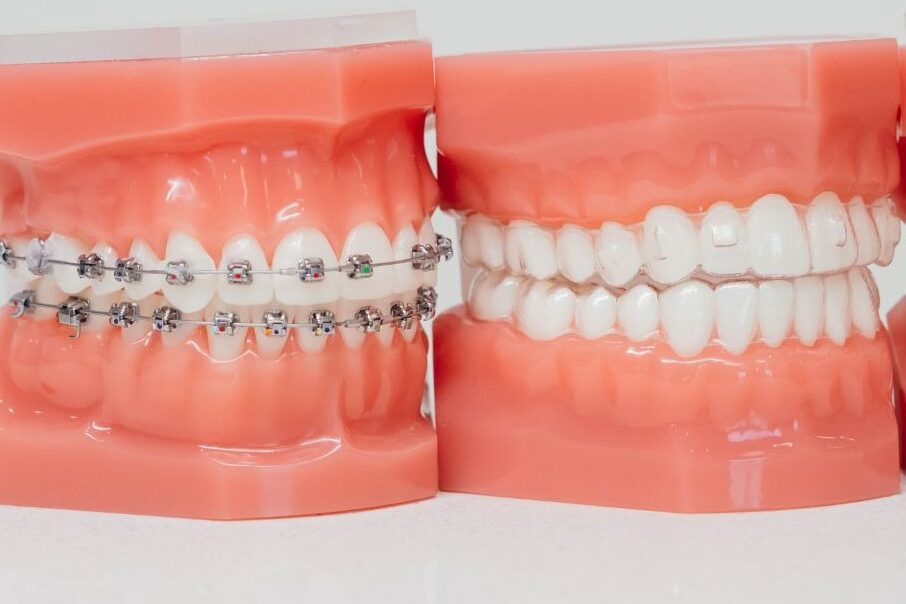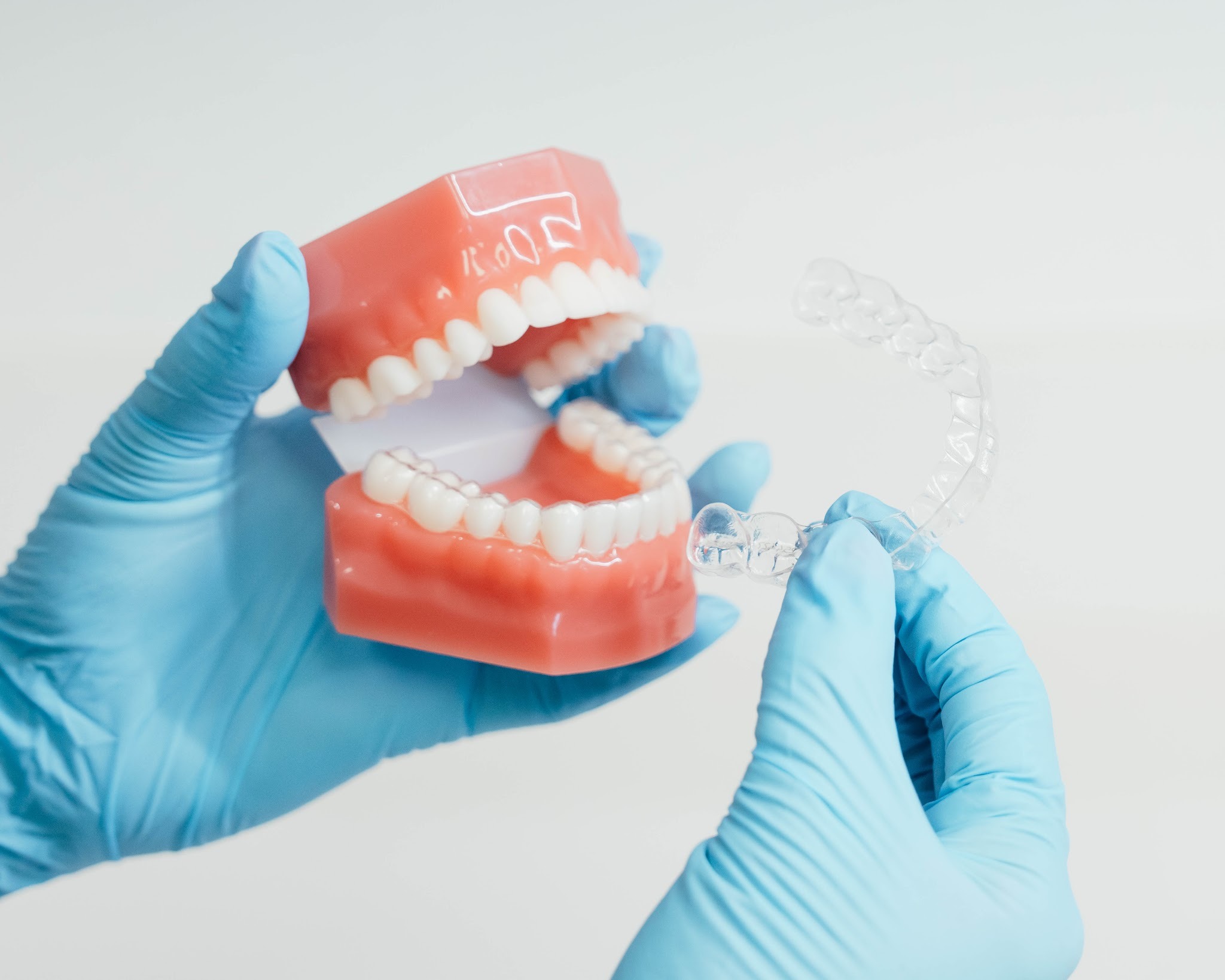
Invisalign is one of the most recognized names in orthodontic treatment. If you have been wondering how does Invisalign work, the short answer is this: a series of custom aligners gradually shift your teeth into place using a precise treatment process developed by Align Technology. No metal wires, no brackets. Just a smooth, nearly invisible tray you swap out every one to two weeks.
The Invisalign Process
Invisalign treatment follows a straightforward sequence from start to finish. Each step builds on the last, so by the time you are wearing your aligners, everything has already been planned out in detail.
Step 1 – Initial Consultation and Digital Scan
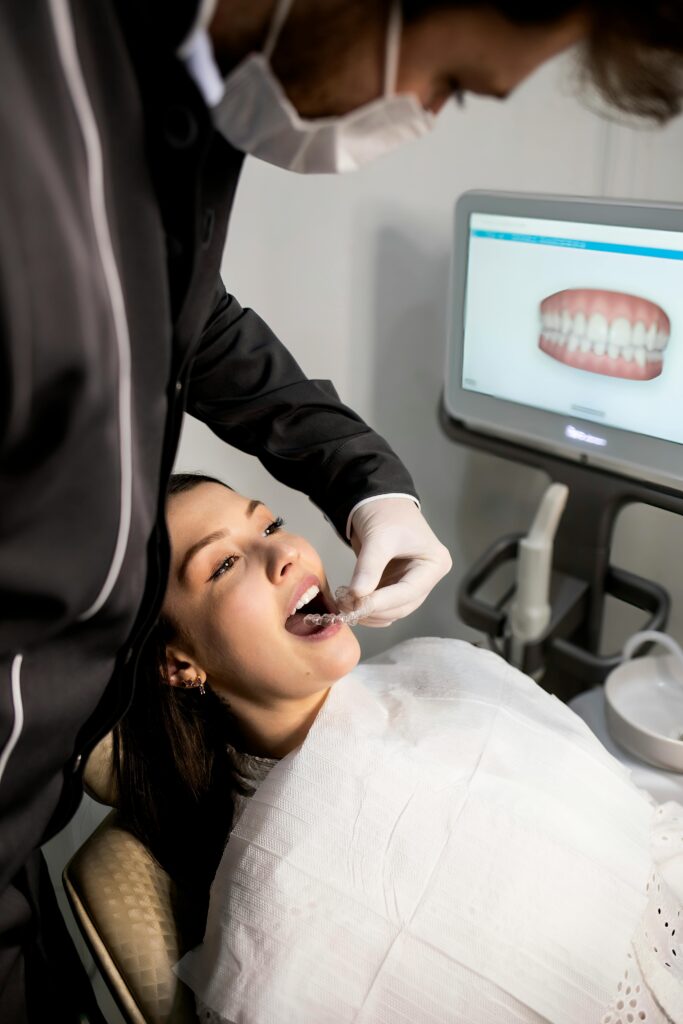
Your treatment process begins with an initial consultation where your provider evaluates your teeth and takes a 3D digital scan of your mouth. This replaces the old-school putty impressions most people dread. The scan creates an accurate model of your teeth that drives the entire treatment plan.
Step 2 – Your Custom Treatment Plan
Using that digital model, your provider maps out each tooth movement from start to finish. Align Technology’s software powers this planning process, allowing you to see a preview of your projected results before your Invisalign clear aligners are even made.
Step 3 – Wearing Your Custom Aligners
You receive a series of custom aligners, each slightly different from the last. Wear each set for about one to two weeks, then move to the next. The Invisalign aligner trays need to stay in for 20 to 22 hours a day. You take them out to eat, drink anything other than water, and brush your teeth.
Step 4 – Check-In Appointments
Every few weeks, you check in with your provider to make sure your teeth are moving on track. This is also when you pick up your next sets of aligners and ask any questions that have come up along the way.
How Invisalign Aligners Move Teeth
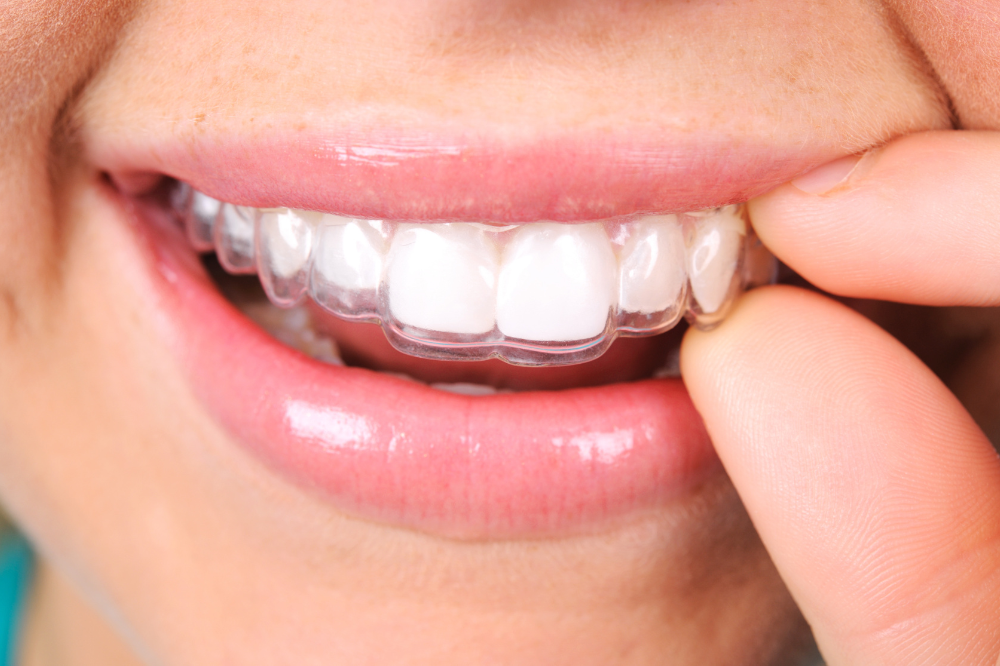
Each Invisalign aligner is designed to apply light, controlled pressure to specific teeth. The movement per tray is small, usually around 0.25 to 0.3 mm. But over weeks and months, those small shifts add up.
Not every tooth moves at once. The treatment process controls which teeth move and when, so progress stays predictable and on schedule. As you work through the series of Invisalign aligner trays, your teeth gradually follow the path your provider mapped out.
The Role of Aligner Design
Each tray is slightly different from the one before it, and those differences are intentional. Every new Invisalign clear aligner targets a specific movement based on where your teeth need to go next. Switching trays on schedule keeps that progress moving forward consistently.
SmartTrack Material: What Makes it Different?
Invisalign clear aligner trays are made from a patented material called SmartTrack, developed by Align Technology. It was created after testing hundreds of materials to find the right balance of flexibility, strength, and clarity.
SmartTrack fits snugly against your teeth without feeling rigid, and it applies consistent pressure so your teeth move predictably. Because it is clear, most people will not notice you are wearing Invisalign braces at all.
How Long Does Invisalign Take to Work?
Treatment length depends on how much movement your teeth need. Mild cases can wrap up in as little as six months, while more involved cases can run up to 18 months or longer. Your provider will give you a more specific timeline after your initial consultation and scan.
Factors That Affect Treatment Duration
A few things influence how quickly you see results. The severity of your misalignment is the biggest factor, but how consistently you wear your Invisalign aligner trays matters just as much. Skipping hours or leaving trays out regularly slows the treatment process, and individual biology plays a role too since some people’s teeth simply respond faster than others.
Best Clear Aligners Compared: Invisalign, Spark, and Beyond
Invisalign is not the only clear aligner on the market, and the right choice depends on your specific case and goals. Here is a quick look at how some of the leading options stack up. Also visit our website to see the clear aligner options we offer.
| Invisalign | Spark Aligners | ClearCorrect | 3M Clarity Aligners | |
|---|---|---|---|---|
| Provider supervised | Yes | Yes | Yes | Yes |
| Material | SmartTrack | TruGEN | Proprietary | 3M Clarity Material |
| Clarity | High | Very High | High | Very High |
| Case complexity | Mild to complex | Mild to complex | Mild to moderate | Mild to complex |
| In-office visits required | Yes | Yes | Yes | Yes |
Invisalign vs. Spark Aligners
Both are strong options for patients who want professional, supervised orthodontic treatment. Spark aligners are made from TruGEN material, which some providers and patients find even clearer than Invisalign’s SmartTrack. Our practice offers both, so we can help you figure out which is the better fit based on your specific case.
Not every patient is the same, and some cases respond better to one system than the other. Having both available means we are not steering you toward one option for the wrong reasons. We recommend what actually makes sense for your teeth.
What About At-Home Aligners?
Mail-order aligner companies skip the initial consultation, in-person exams, and provider oversight that come with professional orthodontic treatment. That approach carries real risk, since no one is monitoring your treatment process in real time. For anything beyond very minor crowding or spacing, in-office treatment is the safer and more reliable route.
Benefits of Clear Aligners Over Traditional Braces
Clear aligners offer a few practical advantages that traditional braces and metal braces cannot match. For a lot of patients, these day-to-day benefits are what push them toward aligners in the first place.
Invisalign clear aligners are nearly invisible, so most people will not notice them during treatment. The smooth material does not irritate your cheeks or gums the way metal braces can. You can remove the custom aligners to eat and drink, so there are no food restrictions to worry about. Brushing and flossing stay easy because you are not working around wires, and check-in appointments tend to be less frequent than with traditional braces. See our blog for more information comparing braces vs Invisalign.
Common Myths About Invisalign
There are a few misconceptions about clear aligners that tend to come up during consultations. It is worth addressing them directly so they do not get in the way of a decision that could genuinely help you.
Myth 1: Invisalign Can Only Fix Minor Issues
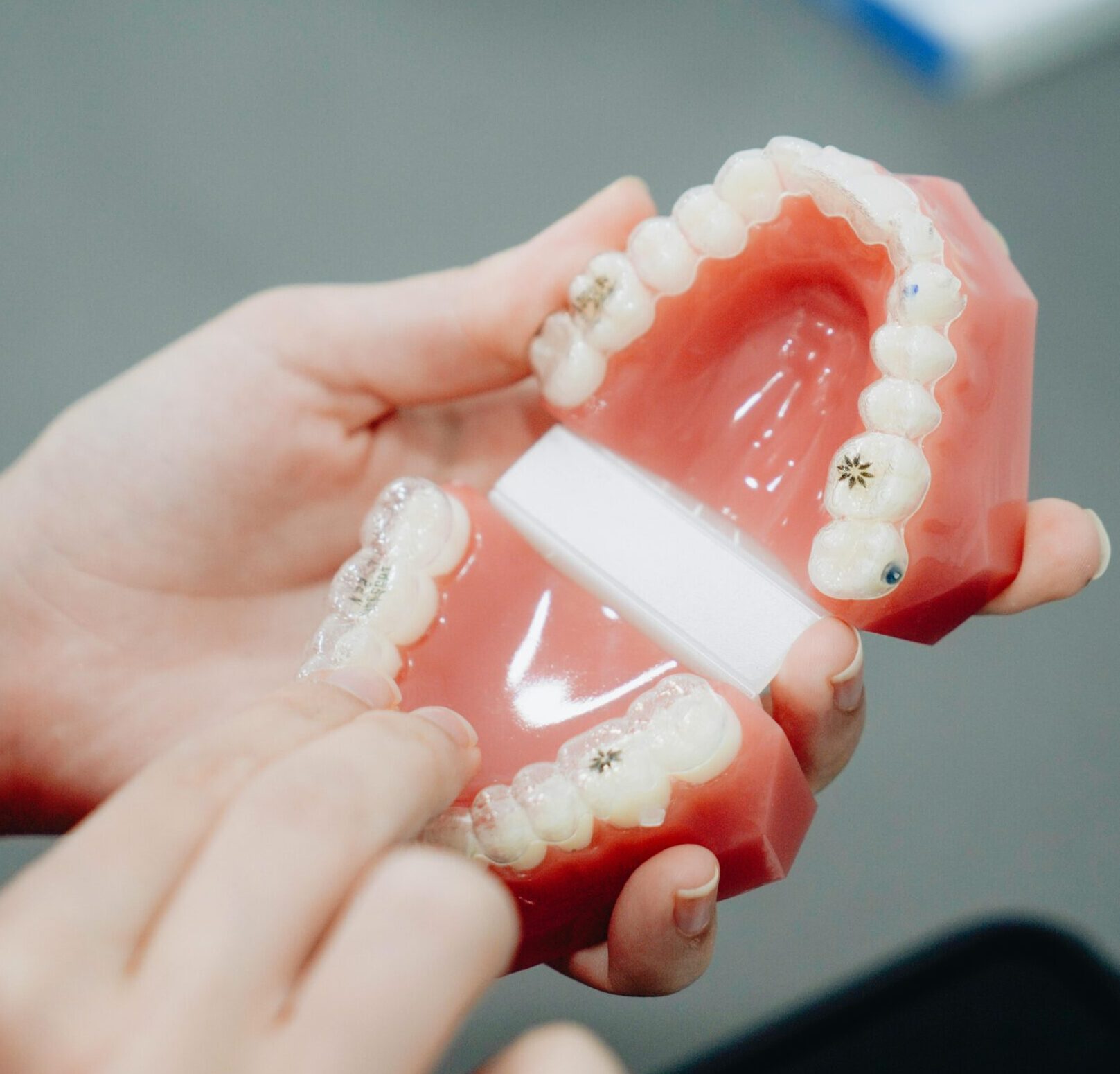
Clear aligners have come a long way, and Invisalign clear aligners can address crowding, spacing, overbites, underbites, and crossbites. More complex cases may require attachments, which are small tooth-colored bumps bonded to your teeth to help the custom aligner trays grip and move teeth more precisely.
Myth 2: Invisalign Is Completely Pain-Free
Invisalign is generally more comfortable than metal braces, but it is not entirely without sensation. When you switch to a new tray, you may feel pressure or mild soreness for a day or two, which is a normal sign that your teeth are moving as planned.
Myth 3: Aligners Are Difficult to Keep Clean
Keeping your Invisalign aligner trays clean is straightforward and does not take much time. Rinse them with lukewarm water when you take them out, brush them gently, and avoid hot water since it can warp the plastic. Invisalign also sells a cleaning system if you want something more thorough.
Keeping Your Results After Treatment
Once your last aligner tray is done, your provider will fit you for a retainer to keep your teeth in their new positions. Teeth have a natural tendency to drift back toward their old positions, and wearing your retainer as directed is what prevents that from happening.
Most people wear their retainer nightly on an ongoing basis after completing the treatment process. Staying current with regular dental cleanings also helps you catch any early shifting before it has a chance to become a bigger issue.
Is Invisalign Right for You?
Understanding how does Invisalign work is the first step, but knowing whether it is the right orthodontic treatment for you is just as important. The best way to find out is to schedule an initial consultation so your provider can review your teeth, walk you through your options, and give you a realistic picture of what the treatment process would look like for your specific situation. American Association of Orthodontics provides more information about when to get a consultation for orthodontic treatment.
Frequently Asked Questions About Invisalign
These are some of the most common questions we hear from patients considering Invisalign clear aligners. If you do not see your question here, reach out to our team and we are happy to help.
Invisalign aligner trays should be worn for 20 to 22 hours per day to stay on track with your treatment plan. The only times you take them out are to eat, drink anything besides water, and brush your teeth. Falling short of that window consistently can slow your progress and extend how long the overall treatment process takes.
Yes, in many cases it can. Invisalign clear aligners are designed to treat a wide range of orthodontic issues including crowding, spacing, overbites, underbites, and crossbites. More complex cases often use small attachments bonded to the teeth to give the custom aligners more control over movement. Your provider can tell you during your initial consultation whether your case is a good fit.
The cost of Invisalign varies depending on the complexity of your case, your location, and your provider. In general, Invisalign treatment is priced similarly to traditional braces, though every situation is different. Many dental offices offer payment plans and accept insurance that covers orthodontic treatment, so it is worth asking about your options during your consultation.
Contact your provider as soon as possible. Depending on where you are in the treatment process, they may have you move on to the next set of Invisalign aligner trays early or order a replacement. Wearing a broken tray or going without one for too long can affect your results, so it is not something to wait on.
Schedule A Consultation With Prince Orthodontics
Thinking about straightening your teeth with clear aligners like Invisalign? The first step is a consultation with Prince Orthodontics. You’ll get a personalized look at your smile and honest guidance on whether aligners will work for your specific case. You’ll walk away knowing what’s possible, how long treatment may take, and what your next steps should be.
If you’re a new patient or need guidance on what aligners would be best for you, schedule a consultation today. We’ll walk you through your options and help you achieve your best smile.