If you’re researching braces for your child, or for yourself, you’ve probably run into the term “Damon braces” and wondered how they compare to the traditional metal braces most people picture. It’s a fair question, and it’s exactly the kind of thing Dr. Prince walks through with families every day.
The short answer: both systems straighten teeth, and both work. But Damon braces work differently, and for most of Dr. Prince’s patients, that difference matters. This post will explain what sets the Damon System apart, what you can expect from treatment, and why Dr. Prince has used Damon braces as his system of choice for over 20 years.
How Traditional Braces Work
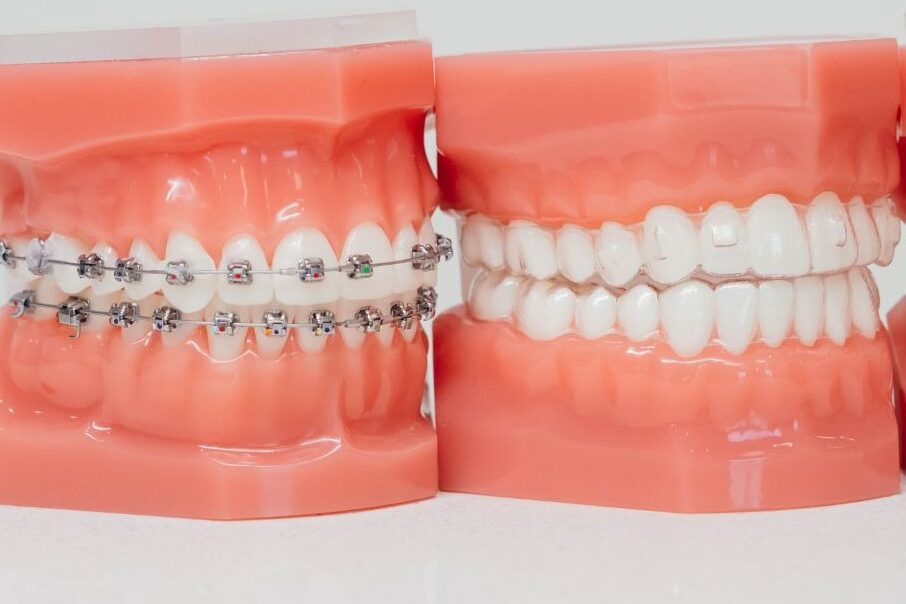
Traditional metal braces have been the standard in orthodontic treatment for decades, and they’re effective. The system uses metal brackets bonded to each tooth, connected by an archwire that applies pressure to gradually move teeth into alignment.
The part most people don’t think about is what holds the wire to the bracket: small elastic ties, sometimes called elastic ligatures or rubber bands. These tiny loops loop around each bracket to keep the wire in place. They do the job, but they also create friction between the wire and the bracket, which means more force is needed to move teeth, and adjustments are required more frequently. Those elastic ties also trap plaque buildup more easily, which requires extra attention to hygiene during treatment.
How the Damon System Is Different
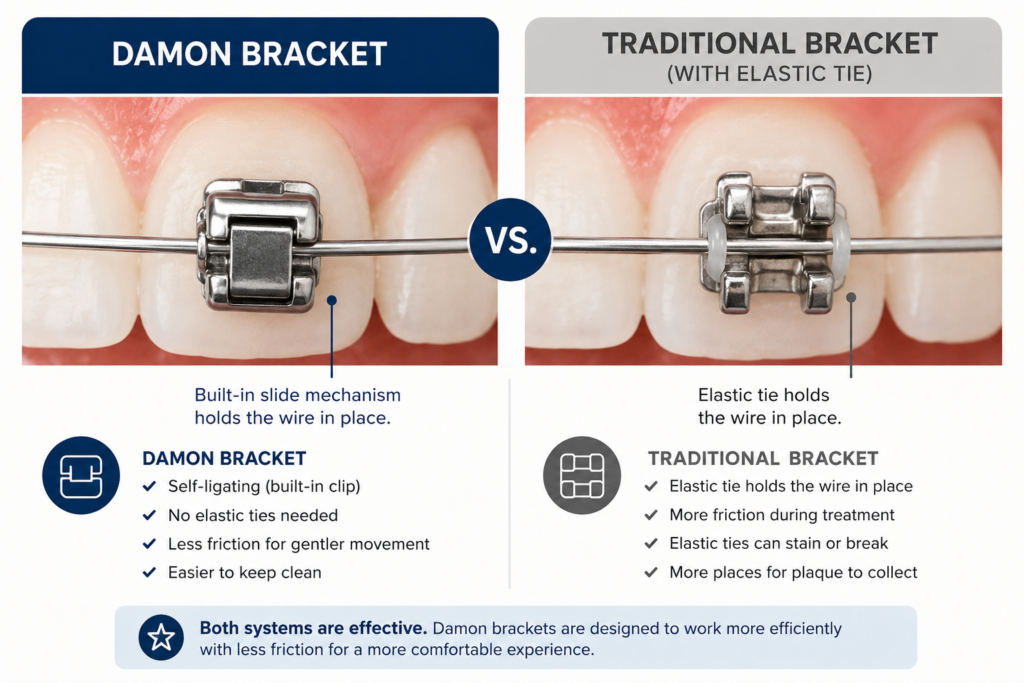
Damon braces are a type of self-ligating braces. Instead of elastic ties holding the wire in place, Damon brackets use a built-in sliding mechanism (a small door or clip built into the bracket itself) that holds the wire without any elastics at all.
That might sound like a small design detail, but the effect on treatment is significant.
With no elastic ties creating friction, the wire can move more freely through the bracket. This means teeth respond to lighter forces and more continuous pressure rather than the periodic, heavier adjustments required with conventional braces. The result is tooth movement that tends to be gentler and more efficient.
Dr. Prince uses the Damon System because it aligns with how he thinks about orthodontic treatment: less force, less disruption to surrounding tissues, and outcomes that go beyond simply straightening teeth.
The Damon Smile
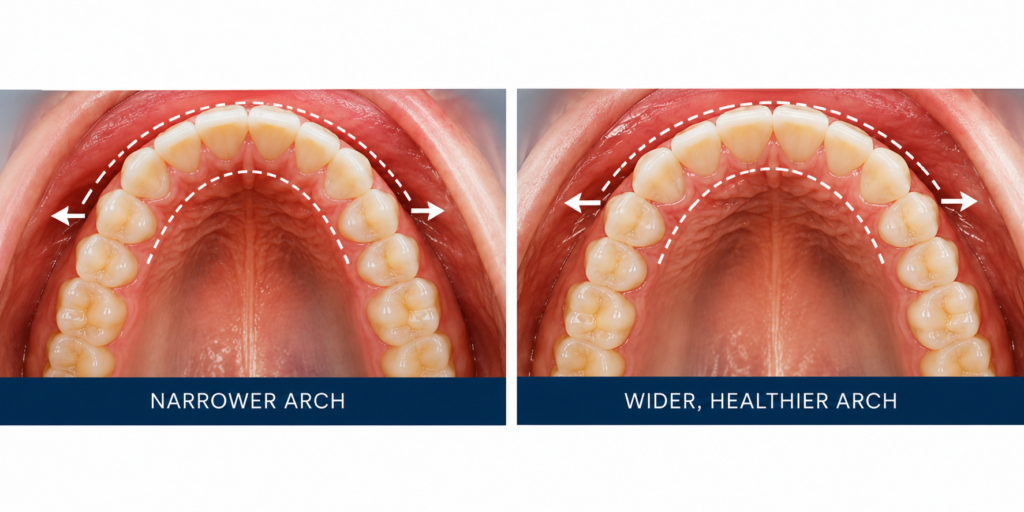
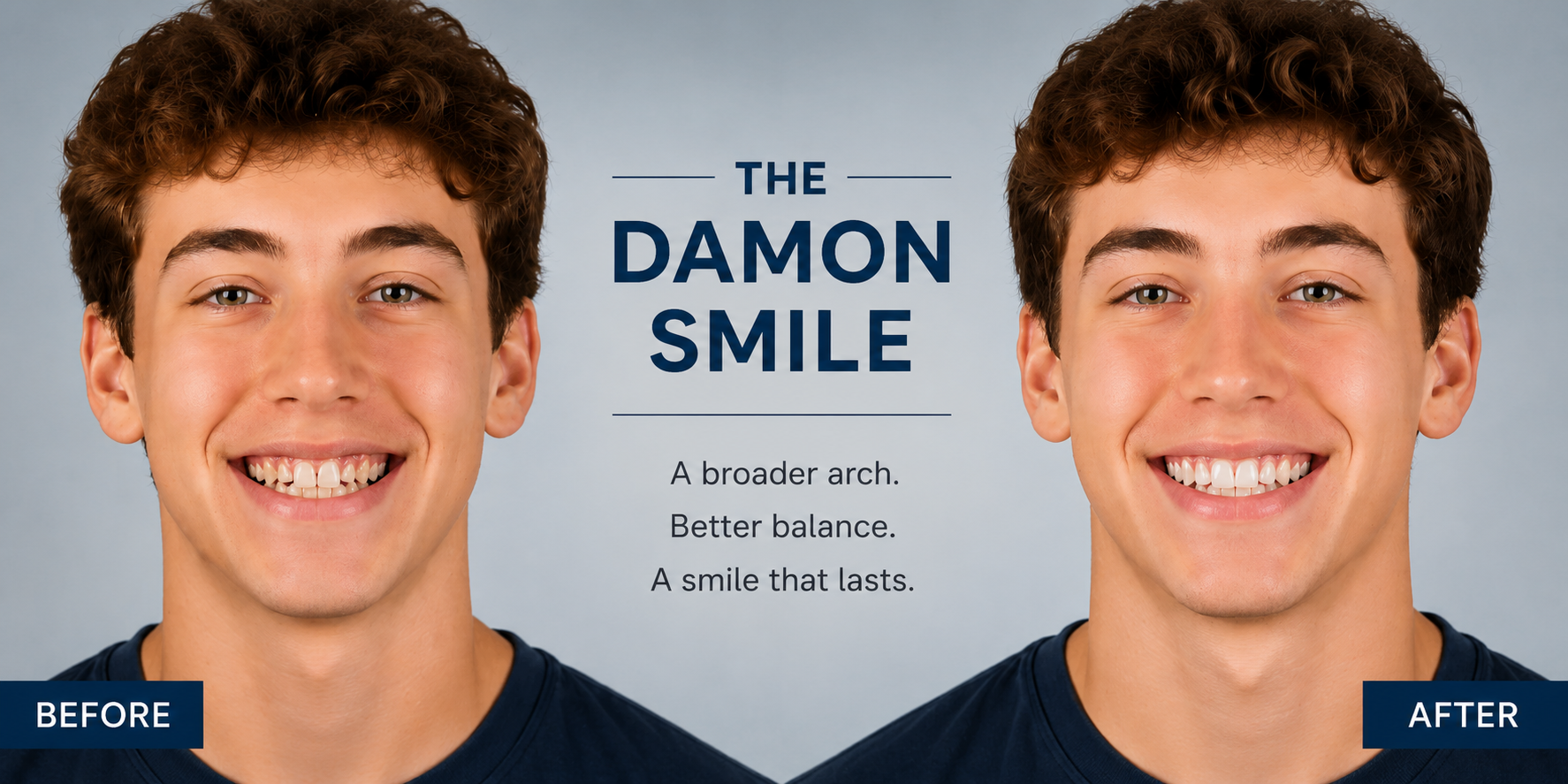
One of the most meaningful, and least talked about, differences between Damon braces and traditional braces is the arch shape they tend to produce.
Traditional braces move teeth primarily within the existing arch. The Damon System, because of how it allows teeth to respond to lighter continuous forces, often develops a broader, fuller arch naturally over the course of treatment. This is sometimes called the “Damon Smile,” a wider, more symmetrical result that can enhance overall facial aesthetics rather than just aligning the teeth.
For parents and teens who care about the final look of the smile, not just whether teeth are “straight,” this is worth understanding before you choose a system.
Comfort and Adjustments
One of the most common concerns patients bring to a consultation is how uncomfortable braces will be. Here’s what the Damon System tends to mean in practice:
Reduced friction. Because Damon brace brackets don’t use elastic ligatures, there’s significantly less friction between the wire and the bracket during tooth movement. Less friction generally translates to reduced discomfort, particularly in the days following an adjustment.
Fewer office visits. Traditional braces typically require adjustments every 4 to 6 weeks. With self-ligating braces like the Damon System, many patients can go 8 to 10 weeks between visits. For families with busy schedules, that’s a meaningful difference over the course of a full treatment.
Gentler force. Because the wires can slide more freely through the Damon brackets, the system uses lighter wires, especially early in treatment. Patients often report that the first few weeks feel more manageable with Damon braces compared to their experience with or expectations of conventional braces.
That said, every patient’s experience is different. Orthodontic treatment involves real tooth movement, and some discomfort after adjustments is normal regardless of the system.
Damon Clear Braces: The Discreet Option
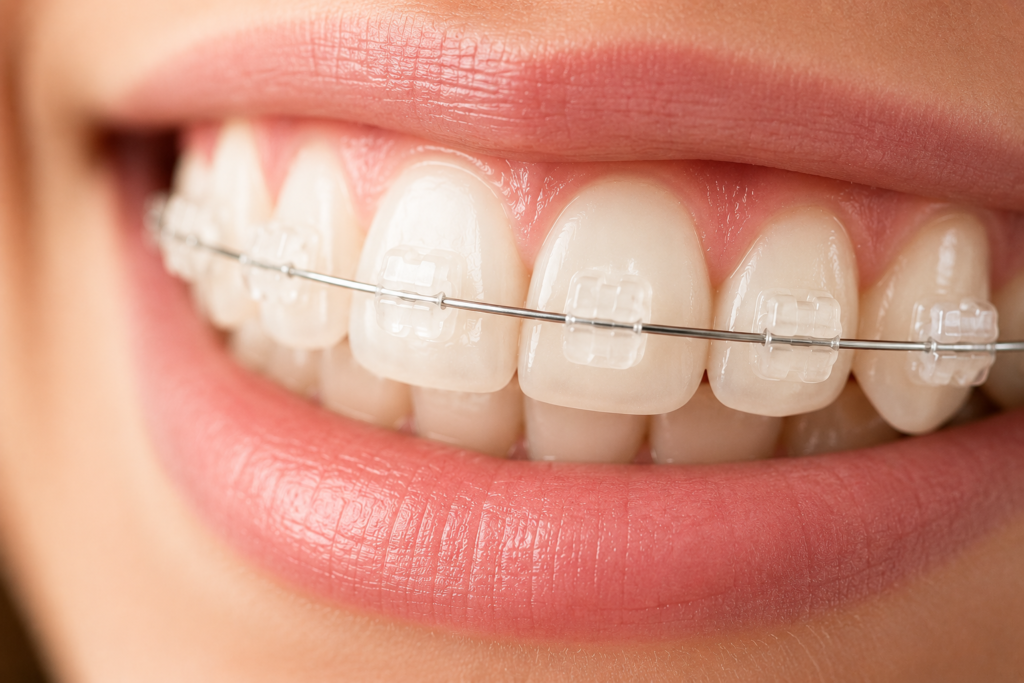
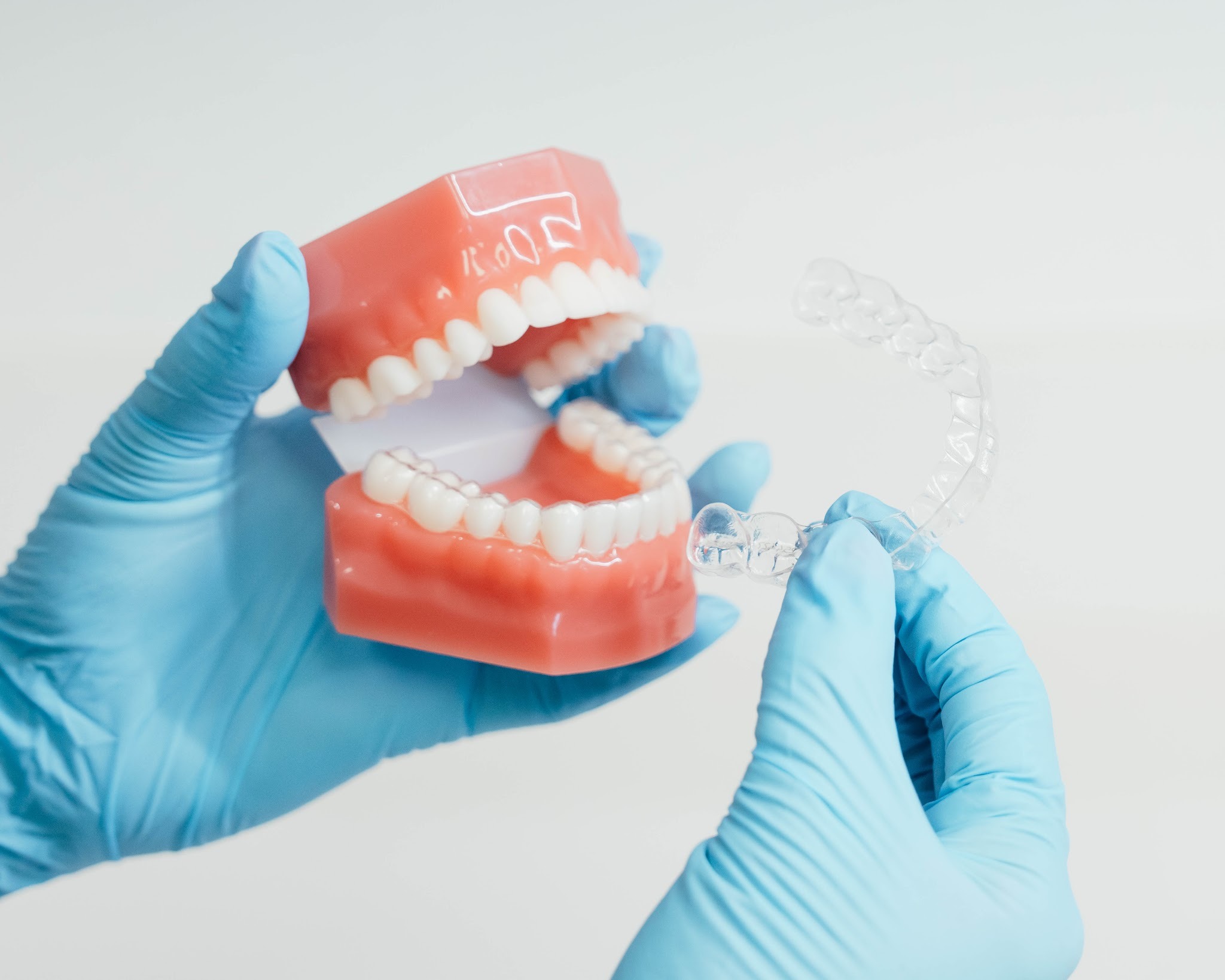
The Damon System isn’t limited to metal. Damon clear braces use the same self-ligating slide mechanism as Damon metal braces, but with clear ceramic brackets that blend in with the natural color of teeth.
Damon clear braces are a popular choice for teens who want the performance of the Damon System with a lower-profile appearance, and for adults who want effective orthodontic treatment without the look of traditional metal braces. Unlike conventional clear braces, which still use elastic ties that can stain, Damon Clear brackets don’t have elastics, which helps keep the brackets looking cleaner throughout treatment.
There’s also the Damon Q, an updated bracket design in the Damon line that features a lower profile and improved torque control, which can be useful in more complex cases. Dr. Prince will recommend the specific bracket type based on your individual treatment needs.
Does Treatment Take Less Time?
Treatment length depends on case complexity, not just the braces system. What the Damon System can offer is more efficient tooth movement thanks to reduced friction and lighter continuous forces. Some studies suggest self-ligating braces can reduce overall treatment time compared to conventional braces, though the difference varies from patient to patient.
What’s consistent for most Damon patients at Prince Orthodontics is that they spend less time in the chair per visit, with fewer appointments overall, while still achieving excellent results.
If you’re comparing treatment timelines between systems, the best answer is always specific to your case. Schedule a free consultation with Dr. Prince to get a realistic picture of what treatment would look like for you or your child.
What About Cost?
Damon braces typically cost more than traditional metal braces, though the gap is smaller than many patients expect. A few factors that affect the comparison:
- Fewer office visits can offset some of the cost difference over the course of treatment
- The Damon Clear option generally carries a higher fee than Damon metal braces
- Insurance coverage and financing options vary
At Prince Orthodontics, we offer a free initial consultation and walk every family through cost and financing before any commitment is made. We’ll never leave you guessing.
Is the Damon System Right for Kids, Teens, and Adults?
Yes. The Damon System is used for patients across all ages and a wide range of case types. Damon braces work for mild crowding, severe misalignment, spacing issues, and bite correction. Dr. Prince uses the system for children, teens, and adults, and has for over two decades.
That said, some cases are better served by other treatment options. Clear aligners like Spark Aligners, lingual braces, or a combination approach may be a better fit depending on your specific situation. Part of what Dr. Prince does in a consultation is assess which path will produce the best outcome for your teeth, your bite, and your goals.
FAQs
What makes Damon braces different from regular braces? The key difference is the bracket design. Damon braces use a self-ligating bracket with a built-in sliding mechanism to hold the archwire in place. Traditional braces use elastic ties. Removing the elastics reduces friction, which affects how force is applied to teeth throughout treatment.
Are Damon braces more comfortable than traditional braces? Many patients report less discomfort with Damon braces, particularly between adjustments. The reduced friction means less pressure on teeth between visits. Individual experience varies, but the lighter forces used in the Damon System are generally associated with reduced discomfort compared to conventional braces.
Do Damon braces work faster than traditional braces? Treatment speed depends on case complexity, but the Damon System’s lower-friction design can allow for more efficient tooth movement. Patients typically have fewer appointments, with longer intervals between visits, which many families find more manageable.
Are Damon braces more expensive? Damon braces are generally priced slightly higher than traditional metal braces. However, fewer office visits and the quality of outcomes factor into the overall value. Contact our office to discuss specific pricing and financing options.
Do Damon braces come in clear options? Yes. Damon clear braces use clear ceramic brackets with the same self-ligating mechanism as the metal version. They’re a popular choice for teens and adults who prefer a more discreet look during treatment.
Is the Damon System right for kids, teens, and adults? The Damon System is designed for patients of all ages. Dr. Prince has used Damon braces to treat children, teens, and adults across a wide range of case types. Whether it’s the right fit for a specific patient is something Dr. Prince determines during a consultation based on your individual orthodontic needs.
Why Dr. Prince Chose the Damon System
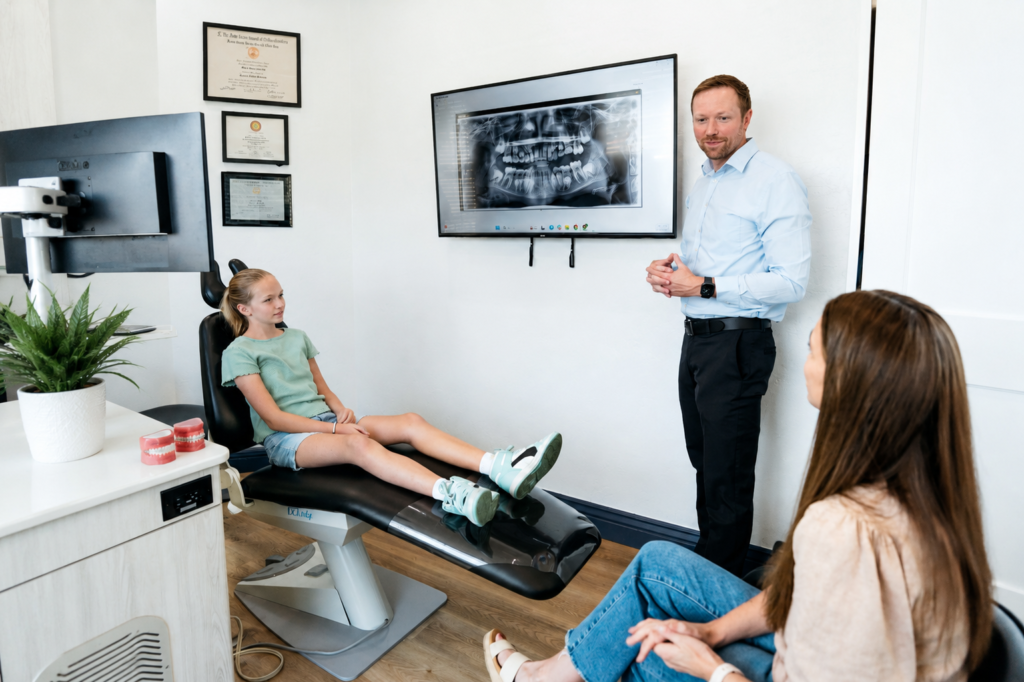
Most orthodontists offer multiple braces systems and let patients choose between them. Dr. Prince made a different decision: after evaluating the outcomes and the clinical evidence, he committed to the Damon System as his primary treatment approach. That’s not a sales position. It reflects more than 20 years of practice, board certification, and a commitment to outcomes that go beyond straight teeth.
When you see Dr. Prince, you’re seeing the same doctor at every visit, from the first consultation through the day your braces come off. That consistency matters in orthodontic treatment, and it’s something we don’t take for granted.
Ready to Find Out Which Braces Are Right for Your Smile?
Choosing between Damon braces and traditional braces is a real decision, and it’s worth making it informed. Dr. Prince will walk you through your options, review your specific case, and give you a clear recommendation. No pressure, no guesswork.
Schedule your free consultation today. We serve families throughout Northern Utah County, including patients in Saratoga Springs, Eagle Mountain, and the surrounding communities.